laisser un message
Si vous êtes intéressé par nos produits et souhaitez en savoir plus, veuillez laisser un message ici, nous vous répondrons dès que possible.
SOUMETTRE
bannière
Maison

bloguer

bloguer

  • Applications of Fly Shearing Blade
    May 07, 2026
    Applications of Fly Shearing Blade: Ferrous and Non-Ferrous Metallurgy: Deeply serving production lines for sheets, bars, pipes, and profiles, achieving high-precision continuous cut-to-length during hot and cold rolling processes.   Precision Machining and Forming: Widely applied to pipe welding, cold bending, and extrusion production lines, ensuring that metal profiles are precisely cut at the moment of output.   Sheet and Strip Finishing: Providing stable and reliable cutting support in slitting, uncoiling and leveling, and various strip processing lines.   Light Industry and Flexible Materials: Cross-industry empowerment for paper, film, textile, and packaging sectors, offering high-speed, continuous cutting solutions for coils, non-woven fabrics, and composite packaging materials.
    EN SAVOIR PLUS
  • Brief introduction of Fly Shearing Blade
    May 07, 2026
    Fly Shearing Blades are key cutting components in industrial automation production lines. The core concept lies in 'dynamic shearing'—that is, the blade synchronously moves with the cutting mechanism and the material to complete the cut without stopping the material conveyance.    Fly Shearing Blades are made from high-grade tool steels such as H13K, HM-3, and high quality alloy tool steels. Thanks to advanced material heat treatment processes, this series of blades possesses excellent impact toughness and thermal hardness, ensuring that the cutting edge remains sharp and wear-resistant under extreme working conditions. Their cutting surfaces are extremely smooth, making them perfectly capable of handling high-frequency shearing tasks from high temperature continuous casting and rolling, hot-forged billets to room-temperature profiles, strips, and wires, with a very long service life.
    EN SAVOIR PLUS
  • How the Paper Polar Knife Redefines Efficiency
    Apr 27, 2026
    Efficiency begins with accuracy. A Paper Polar Knife eliminates the need for secondary trimming by delivering a "one-pass" clean cut. Whether it is a single sheet of heavy cardstock or a 500-page ream, the blade’s specialized bevel angle ensures that the force is distributed evenly. This prevents "mushrooming" (the slight curling of edges), ensuring that every stack is perfectly square and ready for immediate binding or delivery.   Superior Metallurgy Time lost to maintenance is the enemy of productivity. These knives often utilize High-Speed Steel (HSS) or Tungsten Carbide inserts. This superior metallurgy allows the blade to remain razor-sharp for significantly longer cycles than standard steel. By reducing the frequency of blade changes and sharpening downtime, the Paper Polar Knife keeps the production line moving without interruption.   Seamless Integration True efficiency is felt in the workflow. The interaction between the blade and the cutting machine’s hydraulic pressure creates a "silent" cut—a hallmark of a well-calibrated Polar system. For the user, this means less physical vibration, less noise pollution, and the confidence that the first cut will be as perfect as the thousandth.
    EN SAVOIR PLUS
  • 5 Practical Maintenance Tips to Extend the Life of Underwater Pelletizer Blades
    Apr 20, 2026
    The Underwater Pelletizer Blade is the "heart" of your underwater pelletizing system. Its condition determines not only the aesthetics of your final product but also the overall efficiency of your production line. To maximize blade longevity and avoid costly unplanned downtime, follow these five essential maintenance strategies.   1. Precision Alignment and Pressure Control The relationship between the cutter head and the die plate is delicate. Over-pressurizing the blades against the plate causes rapid wear and "grooving." Implement a precise pneumatic or hydraulic pressure setting that ensures just enough contact for a clean cut. Regularly calibrate the alignment to prevent uneven blade wear, which is the leading cause of premature failure.   2. Monitor Water Temperature and Flow The cooling water does more than transport pellets; it acts as a lubricant and thermal stabilizer for the blades. Maintaining a stable Water Box Temperature prevents thermal shock, which can cause micro-cracking in brittle materials like tungsten carbide. Ensure the flow is consistent to prevent "dead zones" where heat can build up.   3. Implement Systematic Blade Sharpening Don't wait for the pellet quality to degrade before checking your blades. Establish a preventative grinding schedule based on production hours or throughput tonnage. Using the correct diamond wheel grade and ensuring a consistent bevel angle during sharpening will restore the cutting edge without removing excessive material.   4. Rigorous Melt Filtration Contaminants are the enemy of sharp edges. Hard particles or metal debris in the polymer melt can cause catastrophic chipping. Utilize high-quality screen changers upstream to ensure that only "clean" melt reaches the die plate, protecting the blades from impact damage.   5. Proper Start-up and Shut-down Procedures Many blades are damaged during the transition phases. Ensure the die plate is fully preheated and the melt flow is stable before engaging the cutter. A "dry start" or hitting cold, solidified plastic can snap a blade instantly.  
    EN SAVOIR PLUS
  • From Tungsten Carbide to Titanium: Which Underwater Pelletizer Blade Suits Your Line?
    Apr 20, 2026
    Choosing the right Plastic Pelletizer Knife for your underwater pelletizing system is a critical decision that directly impacts pellet quality, downtime, and long-term operational costs. While many materials exist, Tungsten Carbide (WC) and Titanium-based alloys (often with specialized coatings) stand out as the industry titans.   Tungsten Carbide: The Workhorse of Hardness Tungsten Carbide remains the "gold standard" for high-volume production. Its primary advantage is extreme hardness and wear resistance. If you are processing abrasive resins like glass-filled polymers or high-density polyethylene (HDPE), WC blades maintain a sharp cutting edge for extended periods. This precision ensures a uniform "spherical" shape and minimizes the production of fines or dust. However, their brittleness makes them susceptible to chipping if the pelletizer plate is misaligned or if foreign metal debris enters the water box.   Titanium & Advanced Alloys: The Specialized Contenders Titanium-based blades, often utilized with Cermet or specialized TiN (Titanium Nitride) coatings, offer a different set of benefits. Their standout feature is corrosion resistance and toughness. For production lines handling chemically aggressive materials or biodegradable plastics, titanium-based solutions prevent premature blade degradation caused by chemical reactions. While slightly less hard than pure WC, they are less prone to catastrophic fracturing under thermal shock or mechanical impact.   To determine the best fit, consider these factors:   Material Abrasiveness: High abrasion favors Tungsten Carbide.   Chemical Environment: Corrosive additives favor Titanium alloys.   Maintenance Strategy: If your operators are prone to aggressive "starting" procedures, the toughness of Titanium might save you from frequent blade replacements.   Ultimately, the goal is to balance the hardness required for a clean cut with the durability needed to survive your specific production environment. Investing in the right metallurgy today is the best way to ensure a seamless, "no-clog" tomorrow.
    EN SAVOIR PLUS
  • The Art of Precision: Metal Cutting Blades
    Apr 13, 2026
    In the grand symphony of modern industrial manufacturing, metal cutting blades are the "hardcore" force that dictates the rhythm of precision.   As a core component among industrial consumables, a cutter blade is more than just a tool; it is the crystallization of material science and precision engineering. When facing stainless steel, known for its extreme toughness and work-hardening properties, or galvanized steel, which requires specialized corrosion resistance for its coating, ordinary blades often fall short. Premium custom blades overcome these challenges by utilizing high-performance high-speed steel or tungsten carbide, combined with advanced vacuum heat treatment processes. This ensures the blade maintains ultra-high hardness while possessing exceptional impact toughness.   Every blade is engineered to conquer the rigidity of metal. Through customized design of the edge's microscopic geometry and reinforcement with nano-coatings like TiAlN, these blades effectively reduce frictional heat and inhibit chip bonding. The result is a cross-section as smooth as silk with every cut.   In today’s pursuit of high efficiency production, precision cutting means more than just reducing material waste—it represents a qualitative leap in equipment uptime. Selecting the superior edge and customizing for the material is key. A high-quality blade is not merely cold steel; it is the essential key empowering the manufacturing industry’s transition toward precision and efficiency. Whether in the high-speed motion of slitting lines or the meticulous environment of precision sheet metal processing, that cool silhouette of the cutting edge remains the steadfast guarantee of industrial productivity.
    EN SAVOIR PLUS
  • Our company specializes in manufacturing custom cutter blades
    Apr 13, 2026
    Our company has been deeply engaged in the industrial cutting field for many years, focusing on the research, development, and manufacturing of high performance customized cutter blades. We provide refined solutions tailored to the physical characteristics of different metal materials:   Stainless Steel Series: Overcoming its high work-hardening rate and stickiness, we use high-red-hardness alloy materials to ensure smooth cutting edges without burrs.   Galvanized Steel Series: By optimizing the cutting edge geometry, we effectively prevent zinc layer peeling and extend the blade's service life in complex corrosive environments.   We not only provide products but are also dedicated to solving technical problems in the cutting process, such as chipping and poor wear resistance, through material selection, hardness matching, and surface coating treatments.  
    EN SAVOIR PLUS
  • Key Specifications of Slitting Knife
    Apr 08, 2026
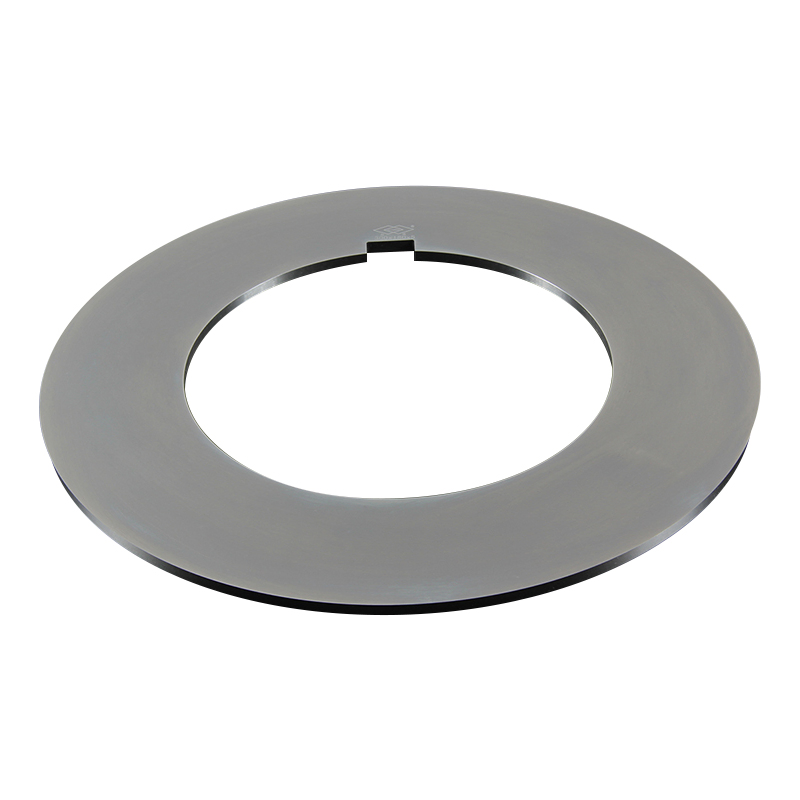
    When selecting or designing a disk knife, several dimensions are critical to ensure compatibility with the slitting machine:   Outer Diameter (OD): Determines the depth of cut and the speed of the blade edge.   Bore/Arbor Hole: The center hole size must match the machine's drive shaft perfectly to avoid "run-out" (vibration).   Thickness: Thinner blades create less waste, but thicker blades are more stable under high lateral pressure.   Bevel Angle: Single Bevel: Sharpest edge, used for soft materials.   Double Bevel: Stronger edge, used for tougher materials to prevent chipping.
    EN SAVOIR PLUS
  • Primary Slitting Methods of Circular Disk Slitting Knife
    Apr 08, 2026
    A circular disk slitting knife is a precision-engineered cutting tool used across various industries—from paper and plastic to metal and textiles—to slice large rolls of material into narrower widths.   There are three main ways these knives are used in a production line:   Shear Slitting: This uses two knives—a "male" (top) knife and a "female" (bottom) knife—that act like a pair of scissors. It is the most common method for high-speed, precise cutting of paper and film.   Crush Slitting: A circular knife with a radiused edge is pressed against a hardened rotating cylinder (anvil). The material is essentially pinched until it separates. This is ideal for non-woven fabrics and adhesives.   Razor Slitting: While often using flat blades, circular razor slitting involves thin, sharp disks rotating at high speeds to slice through thin films without the need for a bottom knife.
    EN SAVOIR PLUS
  • How Blade Shape Defines Shredding Performance
    Mar 30, 2026
    In the world of industrial recycling, the geometry of a double shaft shredder blade is not just a design choice—it is the primary factor determining throughput and material size. The interaction between the rotating hooks and the spacers creates the mechanical shear necessary to break down tough solids.   1. The Number of Hooks The most visible variation is the number of "teeth" or hooks on a single disk.   Single-Hook Blades: These feature a large, aggressive tooth. They are designed for heavy-duty volume reduction of bulky items like tires or large furniture. They provide a powerful "grab" but result in a very coarse, irregular output.   Multi-Hook Blades (3, 5, or more): As the hook count increases, the shredder produces a smaller, more uniform particle size. These are ideal for processing plastics or electronic waste (E-waste) where consistent material sizing is required for downstream sorting.   2. Blade Thickness and Profile The width of the blade directly correlates to the width of the shredded strips.   Narrow Blades: Produce thin strips, increasing the total surface area of the processed material, which is vital for chemical recycling or incineration.   Hook Angle: A sharper, more acute hook angle improves the "bite" on slippery materials like HDPE pipes, while a blunter angle offers higher structural integrity for crushing brittle materials like glass or cast aluminum.   Summary Choosing the right shape is a balance between aggression and precision. While a single-hook blade excels at tearing apart a car tire, a multi-hook configuration is necessary to turn that tire into manageable rubber chips. Matching the blade profile to the specific physical properties of your waste stream is the only way to maximize efficiency and minimize energy consumption.
    EN SAVOIR PLUS
  • Key Advantages of High Performance Granulator Knife
    Mar 24, 2026
    In the plastic granulation process, the granulator knife is far more than just a piece of sharpened steel. It is a precision tool that directly dictates the quality of the final recycled resin. Investing in high-quality blades offers several transformative advantages for recycling facilities.   1. Superior Pellet Uniformity and Quality The primary advantage of a premium blade is its ability to produce clean, consistent cuts. High-grade blades minimize "tails" and "fines" (dust), ensuring that the pellets meet strict industry standards for size and shape. This uniformity is critical for downstream processes like injection molding or extrusion, where inconsistent pellet sizes can lead to feeding issues and structural defects in new products.   2. Enhanced Durability and Wear Resistance Modern pelletizer blades are often crafted from advanced materials like D2 tool steel, high-speed steel (HSS), or tungsten carbide. These materials offer:   Impact Toughness: Resistance to chipping when hitting harder plastic clumps.   Heat Stability: Maintaining a sharp edge even during high-speed, continuous friction.   Extended Lifespan: Reducing the frequency of blade changes, which directly lowers labor costs and machine downtime.   3. Energy Efficiency and Cost Savings A sharp, well-engineered blade requires significantly less torque to shear through plastic. By reducing the resistance during the cutting phase, plants can see a noticeable drop in amperage draw and overall energy consumption. Furthermore, because clean cuts generate less heat, there is a lower risk of material degradation or "gumming up" the equipment, preserving the value of the polymer.   4. Precision Engineering for Specific Resins Whether you are processing soft PE films or abrasive glass-filled nylon, specialized blade geometries allow for optimized shearing angles. This customization ensures that the machine operates at its highest possible throughput without overloading the motor.   In summary, high-performance granulator blades are the backbone of a profitable recycling operation, turning "waste" into a high-value, marketable commodity with maximum efficiency.
    EN SAVOIR PLUS
  • A Guide to Granulator Blade Maintenance
    Mar 24, 2026
    A Guide to Granulator Blade Maintenance: 1. Regular Sharpening and Precision Gapping Never wait for the blade to become completely dull. Operating with blunt edges increases friction, leading to material melting and excessive motor strain.   The Golden Rule: Maintain a consistent sharpening schedule based on the abrasiveness of your plastic (e.g., glass-filled resins require more frequent checks).   Gap Adjustment: Always reset the clearance between the rotating and stationary blades after sharpening. A gap that is too wide leads to "folding" of thin plastics rather than clean cutting.   2. Routine Inspections and Cleaning Before each shift, inspect the blades for nicks, cracks, or loose bolts. Even a single loose fastener can cause catastrophic internal damage.   Remove Contaminants: Ensure the feed material is free of metal debris.   Thermal Checks: Monitor the temperature of the cutting chamber; excessive heat is a primary indicator of dull blades or improper alignment.   3. Proper Lubrication and Storage When the machine is idle for extended periods, apply a thin coat of anti-rust oil to the blade surfaces. This prevents oxidation, which can weaken the cutting edge over time.
    EN SAVOIR PLUS
1 2 3 4 5 6
Information
Entrer en contact
Si nos produits vous intéressent et que vous souhaitez en savoir plus, veuillez laisser un message ici, nous vous répondrons dans les plus brefs délais.
SOUMETTRE
Les fondements de la satisfaction client

laisser un message

laisser un message
Si vous êtes intéressé par nos produits et souhaitez en savoir plus, veuillez laisser un message ici, nous vous répondrons dès que possible.
SOUMETTRE
CONTACTEZ-NOUS: wen@aclshred.com

Maison

PRODUITS

WhatsApp

CONTACTEZ-NOUS